How to Stack Coupons with Cashback Apps for Free Items

- Primary Signal: How to Stack Coupons with Cashback Apps for Free Items
- Overview: Stacking — combining sale prices, store coupons, manufacturer coupons, and cashback apps — is how shoppers turn everyday purchases into free or near-free items. Here is the exact s...
- Verification: Analyzed and compiled by FreeFortune Rewards editorial monitoring desk.
Coupon stacking is the practice of layering multiple discounts on a single purchase so each layer multiplies the last. A shampoo bottle on sale, clipped with a manufacturer coupon and a store coupon, then submitted to a cashback app, can drop from several dollars to nearly free. Retailers allow it because each layer comes from a different budget: the sale comes from the store, the manufacturer coupon from the brand, and the cashback from an app funded by affiliate commissions. Understanding that the layers do not conflict is the key insight that turns casual couponers into serious savers.
Step one is learning each store's coupon policy before you shop. Some chains, like CVS and Walgreens, are famous for allowing one manufacturer coupon plus one store coupon on the same item, along with their own rewards currency on top. Others restrict you to a single coupon per item. The policy is usually posted on the store's website or printed on the coupon itself. Skipping this step is the most common beginner mistake, because there is nothing more frustrating than arriving at the register with a perfect stack and learning the store will not honor it. Treat the policy check as part of your shopping list prep.
Step two is matching coupons to sales, because this is where the real magic happens. A manufacturer coupon for two dollars off a detergent is good on a full-price item, but it is spectacular on an item already marked down for a weekly promotion. Deal hunters call this a triple stack: sale price, plus store coupon, plus manufacturer coupon. Many of the best stacks appear in the weekly circular, so flipping through it before clipping anything saves you from wasting coupons on items that are not on sale. Timing your stock-ups to sale cycles is a core discipline of navigating daily freebies and deal hunting alike.
Step three is where cashback apps enter the picture. After you pay with your stacked coupons, you scan your receipt into apps like Ibotta, Fetch Rewards, or Checkout 51 to claim rebates on the same items. Cashback apps do not care that you used coupons — unless an offer explicitly says otherwise, the rebate applies on top of your in-store discounts. This means a free-after-coupons item can actually become a small moneymaker when the app pays you a dollar or two for buying it. Always check the app's offers before shopping, since some rebates require you to activate them in advance.
Step four is submitting the same receipt to multiple apps. Nothing stops you from scanning one receipt into both Ibotta and Fetch Rewards, or Ibotta and Checkout 51, as long as each app has an eligible offer for the item. This receipt double-dipping is completely legitimate and is standard practice among experienced stackers. Combined with a rewards credit card that earns points on the purchase, a single grocery trip can generate savings across four or five layers. Our guide to credit card welcome bonuses covers how the payment layer adds even more value on top.
A word of discipline to close: stacking works best on items you were going to buy anyway. The system is so satisfying that beginners sometimes buy products they do not need simply because the stack makes them free. A free item you will never use is not savings — it is clutter. Build your stacks around your actual shopping list, track your total savings in a notes app or spreadsheet, and let the system quietly fund your household budget month after month instead of filling your pantry with things nobody wants.
❓ Frequently Asked Questions (Cashback Briefing)
What table limits apply to Cashback VIP high-roller suites?
Selected Salon Privé partners in Monaco, Macau, and Las Vegas feature minimums from $5,000 up to $250,000 per hand, complemented by dedicated VIP concierge hosts and private cages.
How are VIP cashback and rebate percentages structured?
Tiered high-roller programs credit weekly theoretical loss rebates between 12% and 18% with zero turnover wagering restrictions, directly into preferred cryptocurrency or wire accounts.
What progressive jackpot verification safeguards are in place?
All linked progressive prize pools are audited by licensed third-party testing authorities (eCOGRA, GLI) ensuring algorithmic fairness and guaranteed immediate liquidity disbursement.
🎁 Verified Sweepstakes Entry Portal & Free Gift Rules
Direct zero-cost registration links, eligibility verification, and winner boards.
⚡ Claim Free Perks ➔More from FreeFortune Rewards


 ₿ Lucky Satoshi
What Are Bitcoin Casino Cashback Bonuses and How Do They Work?
Bitcoin casino cashback bonuses return a share of your losses as bonus funds. Learn how cashback is calculated...
 💵 GetRichFree Store
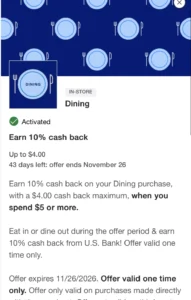
Ofertas de bancos dos EUA: receba 10% de volta na compra de jantar (limite de reembolso de US$ 4)
Ofertas de bancos dos EUA: Ganhe 10% em dinheiro de volta em compras de jantar de US$ 5 ou mais. Máximo de $ 4...
 📦 Free2Rich Vault
Empresas prometem software e computação gratuitos para IA na ciência
Quebrando a cobertura relatada pela Science|Business: Empresas prometem software e computação gratuitos para I...
 🤖 FreeRich AI Hub
Make More Money With Muse.ai: A Practical Automation Playbook for Tech Freelancers
A practical playbook for tech freelancers: automate proposals and onboarding, build business systems, and sell...